
Last updated September 10, 2026
Full 25-point door and opener safety check with every visit - springs, cables, rollers, tracks, and your LiftMaster or Chamberlain opener included
You get a price before we start. It does not change when the truck arrives.
 Before
 After
After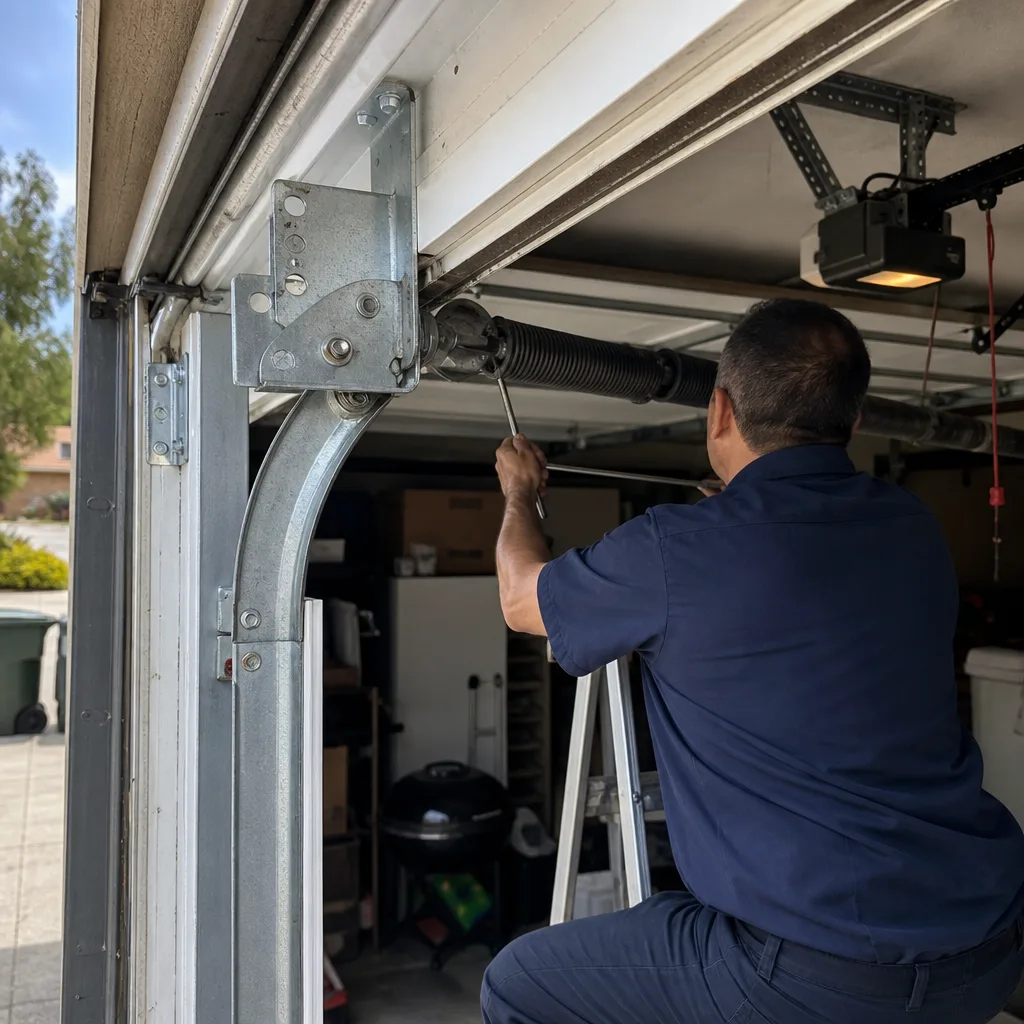 Before
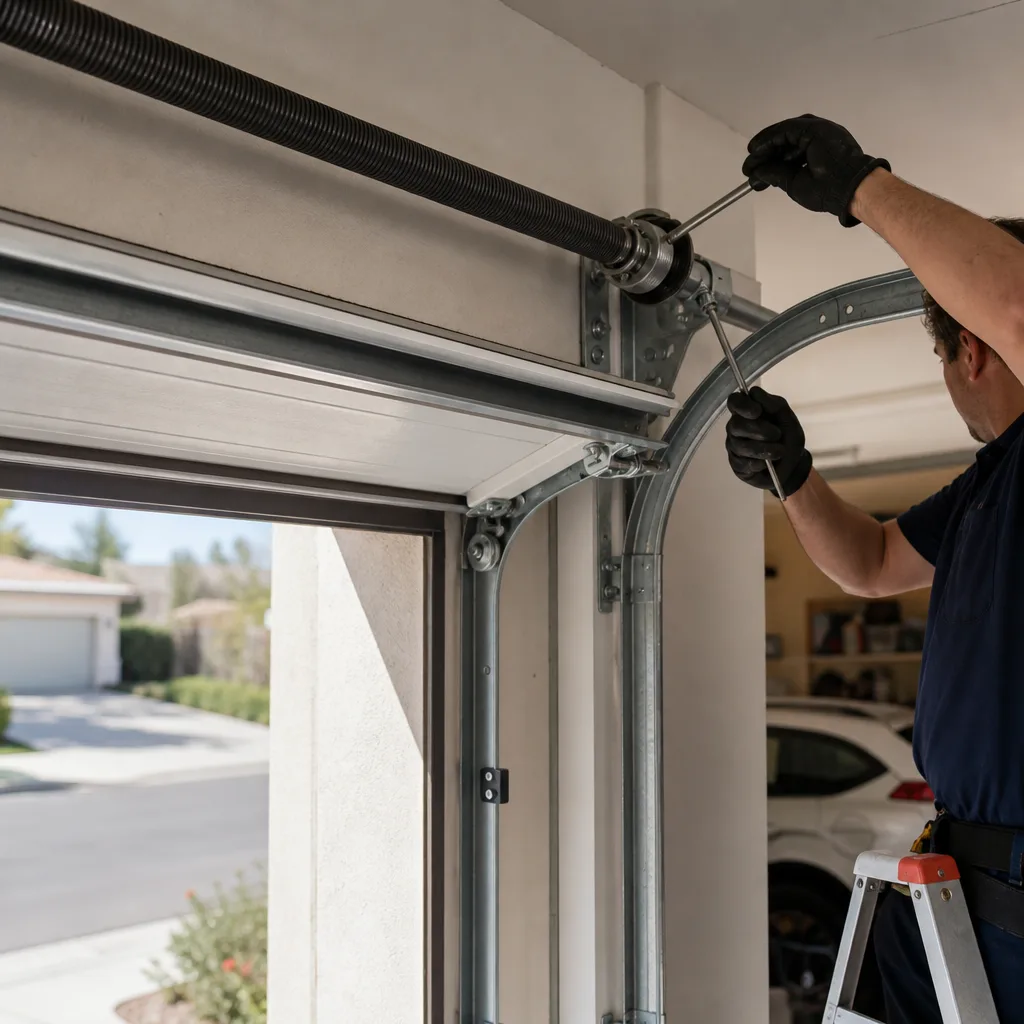 After
After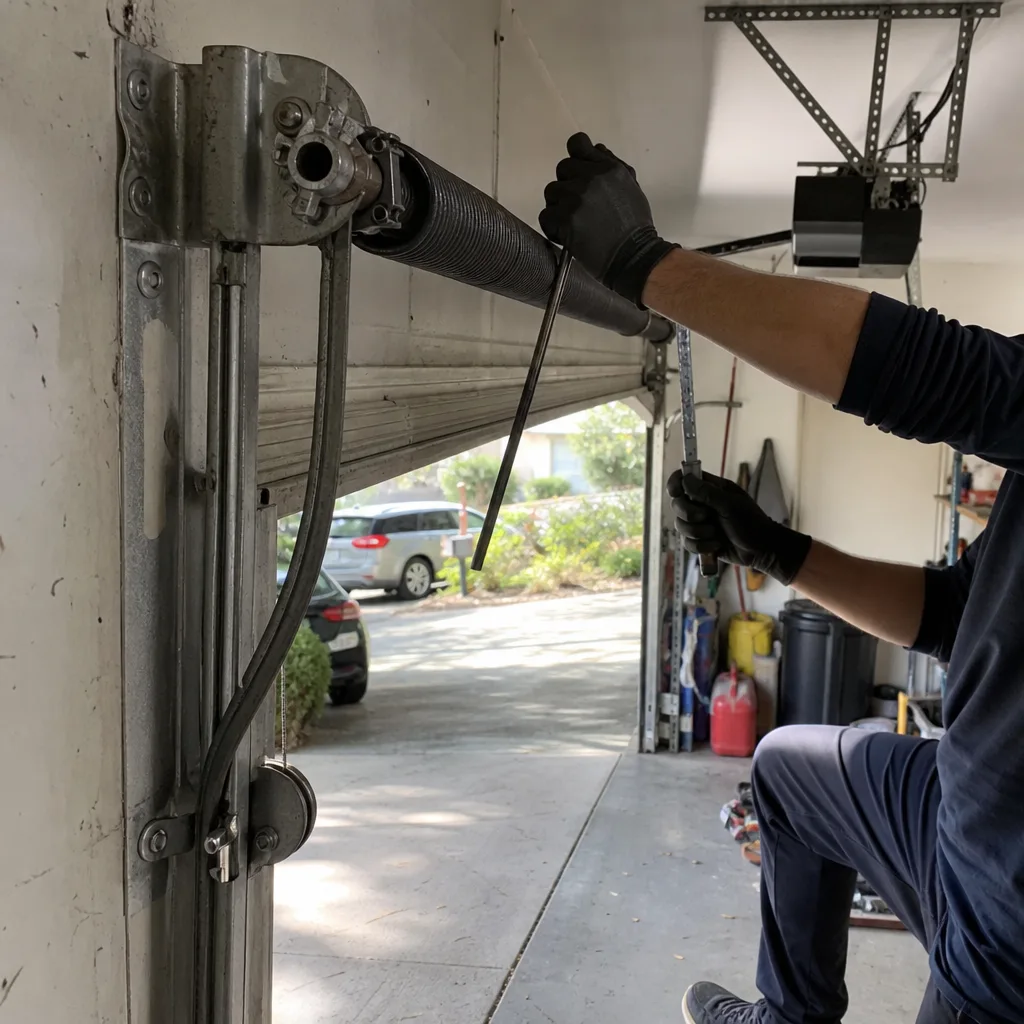 Before
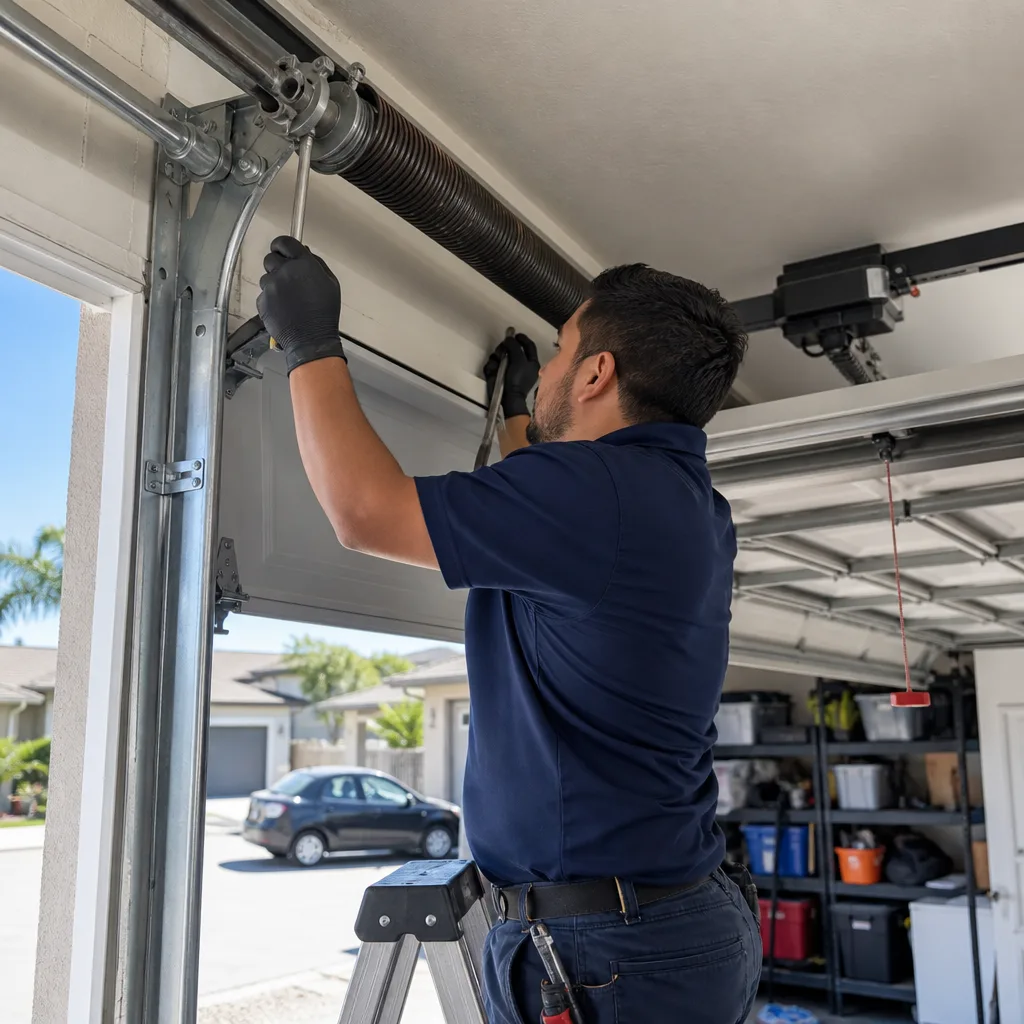 After
AfterHow to Hire a Garage Door Contractor in Escondido: A Step-by-Step Guide
In San Diego County, a garage door contractor does not need a dedicated garage door license. A general B contractor license covers the work. That single sentence explains why the guy with three weeks of experience and Otto, who has been doing this in Escondido since 2004, look identical on paper. By the time the door is jammed halfway up, you’re not hiring a license. You’re hiring whoever answers the phone. This guide walks you through the exact steps to separate a twenty-year local shop from a pop-up truck that won’t answer in six months, or you can explore our more guides & resources for additional homeowner help.
Quick Answer
To hire a garage door contractor in Escondido, verify their CSLB license at cslb.ca.gov, confirm a published physical address inside the county, and ask three questions on the first call: Who shows up, what’s the total before work starts, and what happens if the fix fails ninety days later. A legitimate local shop answers all three directly. A dispatch center hedges. Get the answers before the truck arrives, not after.
Table of Contents
- Verify the CSLB License Before Anything Else
- The Three Questions That Separate a Local Owner From a Dispatch Center
- What a Legitimate Written Estimate Must Include in California
- Parts Warranty vs. Labor Warranty: Why the Distinction Matters
- Escondido Red Flags: What to Watch For When the Truck Pulls Up
- The Full Hiring Process, Step by Step
- Common Mistakes to Avoid
- When to Call a Professional
- Frequently Asked Questions
- The Bottom Line
Verify the CSLB License Before Anything Else
Every legitimate garage door contractor in Escondido carries a California State License Board number. The CSLB does not issue a dedicated garage door license class. The work falls under a general B classification, which covers a broad range of building trades. This is where the problem starts. A B license tells you the person passed a law and business exam and has four years of journey-level experience in some construction trade. It does not tell you whether that experience involved a single garage door.
Here’s the two-minute verification that actually matters:
- Go to cslb.ca.gov and click “Check a License.” Enter the license number or business name. The license must show as “Active.” Not “Expired,” not “Suspended,” not “Inactive.”
- Confirm the business name matches. If the invoice says “Bob’s Garage Doors” but the license belongs to a different entity entirely, that’s your first flag.
- Check the license address. If it’s a P.O. box in Sacramento or a suite in a commercial mail service, you’re not talking to a local contractor. Otto’s Garage Door publishes a physical address any homeowner in Escondido can verify before the truck arrives.
- Look at the bond and insurance status. The CSLB page shows whether the contractor’s bond is current and whether workers’ compensation insurance is on file. If workers’ comp is missing, the person standing on your driveway is not covered if they get hurt on your property.
The license class matters beyond the garage door itself. A B general contractor can pull permits for structural work, which matters if you’re replacing the entire opening or modifying the header above the door. A C-61 limited specialty contractor cannot. In Escondido, most garage door repairs are straightforward, but if you’re widening an opening or installing a new door where none existed, you want the B classification and the permit pulled properly. For a deeper look at local requirements, see The Complete Guide to Garage Door in Escondido.
And one thing the CSLB page won’t tell you: how long the license has been continuously active under the same owner. A license issued six months ago and one issued in 2004 both show as “Active.” For that, you ask the next three questions.
The Three Questions That Separate a Local Owner From a Dispatch Center
Most homeowners in Escondido skip these questions because they feel awkward on a phone call. That’s exactly what the pop-up operations count on. Three questions, asked in order, reveal whether you’re talking to a local owner or a routing service:
- “Who’s showing up to my house, and what’s their name?” A local owner tells you. Otto answers the phone himself and tells you he’ll be the one on the driveway. A dispatch center says “a technician” and can’t give you a name because they won’t know until the call gets assigned.
- “What’s the total price before anything gets taken apart?” Listen carefully to the response. A straight number with the scope attached means the person on the phone has done this job hundreds of times and knows what it costs. A range with “we’ll see when we get there” means you’re financing someone else’s learning curve. Otto quotes the job on the call and holds that number when he gets there.
- “If this fails again in three months, who comes back and what do I pay?” The answer should reference a written warranty and a name. The 90-Day Done Right Promise at Otto’s Garage Door is written on every invoice: if it’s not done right, one call brings Otto back, no runaround. A dispatch center gives you a warranty phone number that routes to another queue.
In Escondido, these questions matter more than in most markets. This is a county where word travels at the feed store and the hardware store, where a contractor’s reputation follows him to church on Sunday. The person who will see you again on Saturday quotes differently than the person who drove down from Riverside for the day.
What a Legitimate Written Estimate Must Include in California
California’s Home Improvement Contract law requires specific items on any written estimate for work over $500. Most garage door repairs fall under that threshold for parts and labor, but a new door installation or a full opener replacement will not. A legitimate written estimate includes:
- The contractor’s name, physical address, and CSLB license number. Not a phone number and a first name. The address on the estimate should be a place you could drive past.
- A line-item breakdown of parts and labor. “New Clopay door, installed, $2,400” is not a line item. “Clopay Model 4050 door, 16×7, white, $1,450; torsion spring pair, $180; labor, $520; haul-away, included” is.
- The total price, written as a number. California law requires the total to be clear and the estimate to be signed. If the price column is blank, the estimate is not an estimate.
- Start and completion dates. Repair jobs are same-day. Installations have a lead time. Both should be in writing.
- Warranty terms in writing. Not “we stand behind our work,” but “90-day labor warranty on all repairs, one year on parts.”
The line items missing from a lowball quote are telling. A quote that lists “door, installed” with no breakdown of spring brand, opener model, or labor hours is hiding margin in the ambiguity. The low bid becomes a door that shows up without the right hardware, and suddenly the price changes. Otto’s Garage Door gives you the full breakdown on the phone and holds it. No-hassle upfront pricing that does not change between the phone and the driveway.
Free Second Opinion: if you have a written estimate from another company in Escondido, Otto will take a look at it and tell you whether the numbers are honest. No trip charge inside the county. If the quote is fair, he’ll tell you that, too.
Parts Warranty vs. Labor Warranty: Why the Distinction Matters
Here’s the part most contractors hope you don’t think about. When a torsion spring breaks under warranty and the manufacturer sends a replacement, someone still has to install it. The part is free. The labor is not, unless the labor is covered. A parts-only warranty means you’re paying $150 to install a free spring. A labor warranty means the whole job is covered.
Ask this exact question: “If the part fails during the warranty period, do I pay for labor to replace it?”
The answer tells you whether the contractor stands behind the work or hides behind the manufacturer. Genie, Clopay, Amarr, and Wayne Dalton all honor their parts warranties through their dealer network. The dealer decides whether labor is covered. That’s a business decision, not a manufacturer policy.
At Otto’s Garage Door, the 90-Day Done Right Promise covers the labor on every job, in writing, on the invoice. If a part fails during that window, Otto comes back and fixes it. No invoice for the second trip. This is the difference between a warranty designed to sound good and one designed to be used.
This matters more on the heavy-use components. Torsion springs are rated in cycles, and a spring installed wrong will fail inside ninety days. If the labor is covered, you lose nothing. If it’s not covered, one bad install becomes two charges. Ask before the first spring gets wound.
Escondido Red Flags: What to Watch For When the Truck Pulls Up
Escondido is a specific market. It is not Los Angeles, where dense competition keeps prices honest and bad actors cycle through quickly. It is also not a rural county where everyone knows everyone. It sits in between: suburban enough for outside crews to target, small enough that a local reputation is worth protecting. That mix creates a specific set of red flags:
- Out-of-area plates on the van. Riverside, Temecula, even Phoenix. A crew that drives two hours each way is not coming back for warranty work. They know it, which is why they price lower and finish faster.
- No physical address on the invoice. A P.O. box, a phone number, a website with no street address. In Escondido, you should be able to drive past the shop. Otto’s Garage Door has a published address and license number any homeowner can verify before the truck arrives.
- The “today only” pricing pressure. “If you book today, I can do $200 off.” A twenty-year shop doesn’t need to pressure you into a decision. The price is the price, and it will be the same tomorrow. The urgency is a closing tactic, not a customer benefit.
- A blank, unmarked van. No company name, no license number on the door. California law requires contractors to display their license number on all commercial vehicles. No number on the van is a CSLB violation and a sign the person doesn’t want to be found later.
- The person at the door is not the person from the lease or the quote. You asked who shows up. The answer was a name. The person standing there is someone else. That’s not a mix-up. That’s a sub-contract.
None of these flags individually proves a scam. Together they paint a picture: someone who is hard to find after the check clears. In Escondido, the good contractors have magnets on their trucks, their kids go to the same schools as yours, and their number is in half the garage door openers in the neighborhood. Otto’s Garage Door home has been locally owned and owner-operated since 2004. The name on the van is the name on the license.
The Full Hiring Process, Step by Step
Here is the complete process, from first symptom to signed invoice. Ten steps. No step skippable.
- Identify the actual problem. Is the door stuck, making noise, opening crooked, or refusing to reverse? You don’t need to know the fix. You need to describe the symptom accurately. That’s what a good phone diagnosis starts with.
- Get two or three phone quotes. Call local shops in Escondido. A repair quote should be given on the phone, not after a home visit. If a company refuses to quote over the phone, that’s a policy designed to get a person into your house for a sales pitch.
- Ask the three questions. Who shows up, what’s the total before work starts, and what happens if it fails. Write down the answers.
- Verify the CSLB license. Two minutes on cslb.ca.gov. Active license, matching business name, physical address in the county.
- Check the local reputation. Ask your neighbors. In Escondido, the best garage door contractor is the one who already fixed three doors on your street. Otto is a palindrome, as he’ll tell you: reads the same from either end, same as the door.
- Compare the written estimates side by side. Same parts, same scope, same warranty terms. If one estimate is 40% lower than the others, the scope is different, not the overhead.
- Pick the contractor you would recognize at the hardware store. All else equal, the local name wins. The person who will see you again in the neighborhood has a reason to do the job right.
- Confirm the price before work starts. Write it down. Your word against theirs is not a position you want to be in. The estimate should be signed and the total circled.
- Watch for scope changes. A legitimate contractor stops and calls you over when the job turns out bigger than expected. A bad one hands you a bill at the end. No legitimate company changes the price without your sign-off.
- Get the warranty in writing on the invoice. Not a verbal promise. The 90-Day Done Right Promise is written on every invoice from Otto’s Garage Door. If it’s not on paper, it did not happen.
Garage Door Repair in Escondido follows this exact process on every call. The estimate is free, the price is quoted on the phone, and the warranty is on the invoice before the work begins.
Common Mistakes to Avoid
- Hiring before verifying the license. The CSLB check takes two minutes. Skipping it because the person on the phone sounded nice is how you end up with an unlicensed sub from another county working on a 200-pound door.
- Accepting a quote without a line-item breakdown. “Installed, $1,000” could mean a $400 door and $600 in mystery charges. A real estimate names the parts and the labor separately.
- Not asking about labor warranty. The part fails, the manufacturer replaces it, you still pay labor. The question takes five seconds and reveals more about the contractor than any review.
- Falling for “today only” discounts. A legitimate price doesn’t expire at midnight. The urgency is a manipulation tactic, and the price that evaporates tomorrow is a price that was inflated today.
- Ignoring where the truck is registered. Escondido’s market attracts outside crews who undercut local shops and disappear. If the van has out-of-county plates, the warranty is only as good as the distance they’ll drive to honor it.
- Skipping the written estimate on small repairs. A $200 spring replacement doesn’t need a contract. But a quick text or an email with the price and the warranty still protects you. Get it in writing, even as a photo of the invoice.
- Choosing the lowest bid by default. The cheapest quote in Escondido is often a different scope in disguise. Compare line items before you compare totals.
When to Call a Professional
Some garage door work is genuinely dangerous. Torsion springs are wound under extreme tension, and when one lets go, the force can break bone. A door is 200 pounds riding on two springs. If you hear a loud bang from the garage, that was a spring failing. Don’t try to reattach anything. If the cables are frayed or dangling, do not stand under the door. If the opener is straining, the problem is almost never the opener. Call a person who counts spring cycles the way you count tire miles and can tell you what’s left on yours. Otto’s Garage Door offers free estimates in Escondido. Call (760) 313-7785 and a live person answers, nine at night included.
Frequently Asked Questions
A general B contractor license from the California State License Board covers garage door work in Escondido. There is no dedicated garage door license classification in California. Verify the license is active, the business name matches, and the address is local before you hire.
Go to cslb.ca.gov, click “Check a License,” and enter the license number or business name. The page shows license status, bond status, workers’ comp coverage, and the business address. The entire check takes under two minutes.
Garage door repair in Escondido typically runs $180 to $340 for a spring replacement, $150 to $300 for a cable repair, and $250 to $600 for an opener fix. The price depends on the parts, the door size, and whether the job is same-day emergency or scheduled. Call (760) 313-7785 for an exact quote. Estimates are free.
A valid California garage door estimate includes the contractor’s name, physical address, CSLB license number, a line-item breakdown of parts and labor, the total price, start and completion dates, and warranty terms in writing. If any of those are missing, the estimate is incomplete.
Yes. Estimates are free, and Otto quotes the job on the phone and holds the number when he gets there. No trip charge inside the county. The price on the phone is the price on the invoice.
No. The price quoted on the phone is the price at the door. If the job turns out to be bigger than described, Otto stops and explains the difference before any additional work happens. You sign off on every scope change before it starts.
The 90-Day Done Right Promise covers labor on every job in writing. If something fails inside ninety days, one call brings Otto back to fix it, no runaround, no second invoice. Call (760) 313-7785 and he’ll make it right.
Yes. Otto and his crew are trained across LiftMaster, Chamberlain, Genie, Clopay, Amarr, Wayne Dalton, Craftsman, and Raynor. Garage Door Opener in Escondido covers openers from every major manufacturer, installed with the same warranty.
The Bottom Line
Hiring a garage door contractor in Escondido comes down to three questions, one license check, and a written estimate. Verify the CSLB number is active and local. Ask who shows up, what the total is before work starts, and what happens if the fix fails. Get the warranty on labor, not just parts, in writing on the invoice. Watch for out-of-area plates, missing addresses, and pressure pricing. The cheap quote usually hides a different scope, and the outside crew usually skips town before the warranty matters. For Garage Door Installation in Escondido or repair, a local name you can verify beats a low number every time. Call (760) 313-7785 for a free estimate, quoted on the phone and held at the door.
Written by Otto Reinhardt, Owner at Otto’s Garage Door, serving Escondido since 2004.