
Last updated September 10, 2026
Full 25-point door and opener safety check with every visit - springs, cables, rollers, tracks, and your LiftMaster or Chamberlain opener included
You get a price before we start. It does not change when the truck arrives.
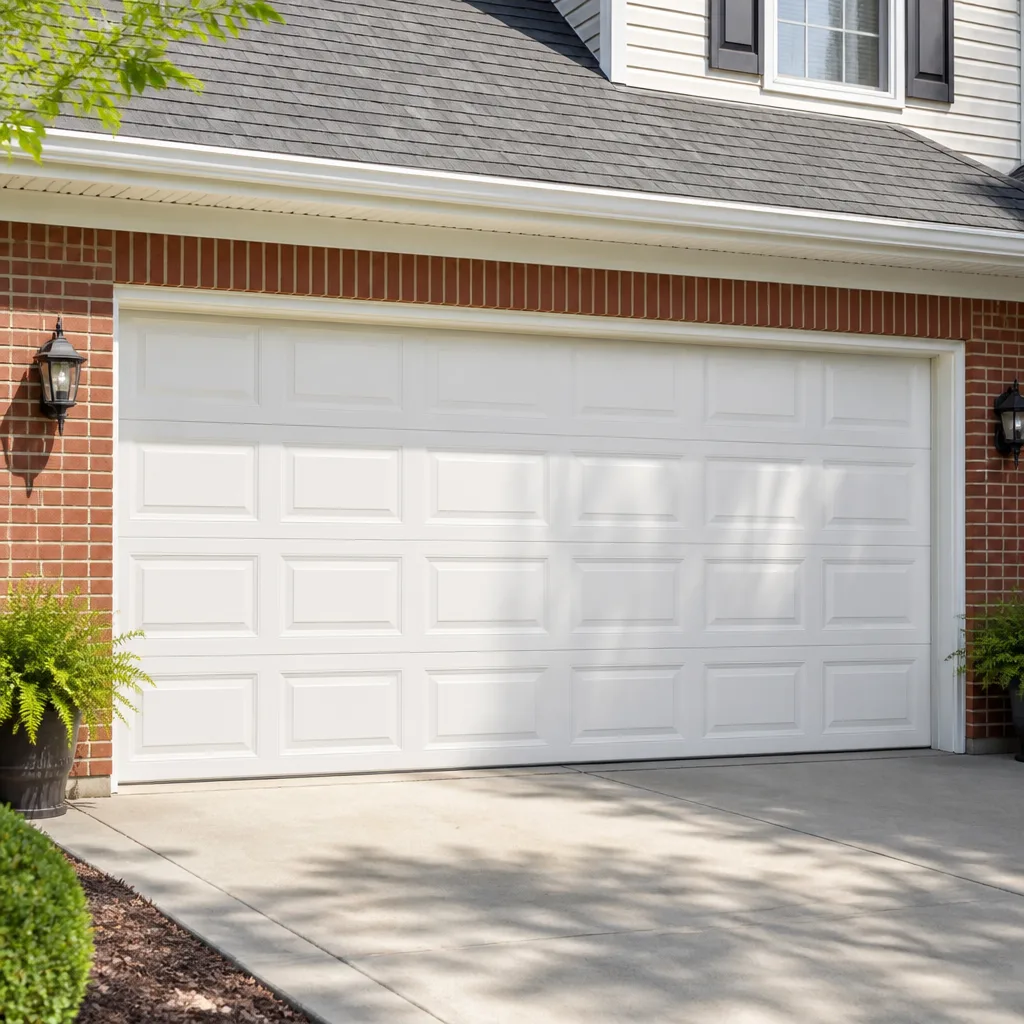
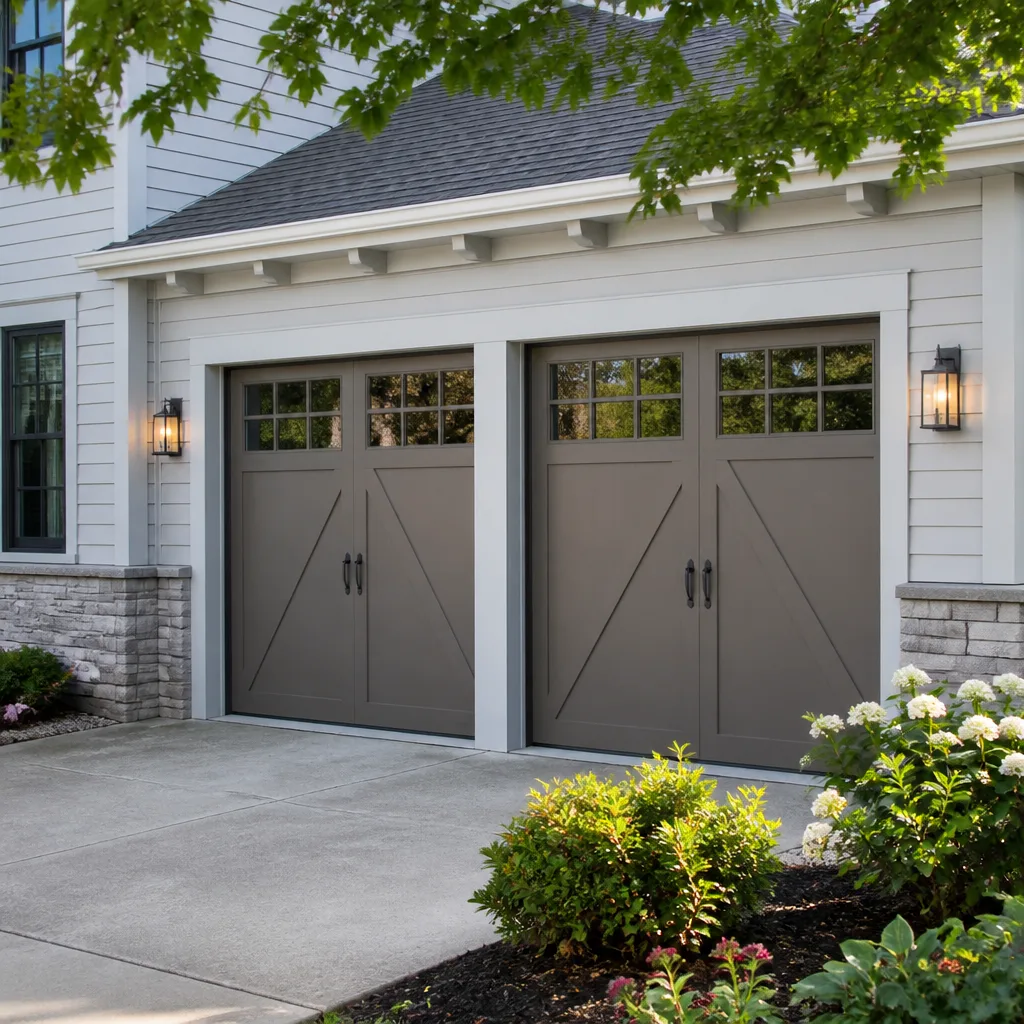
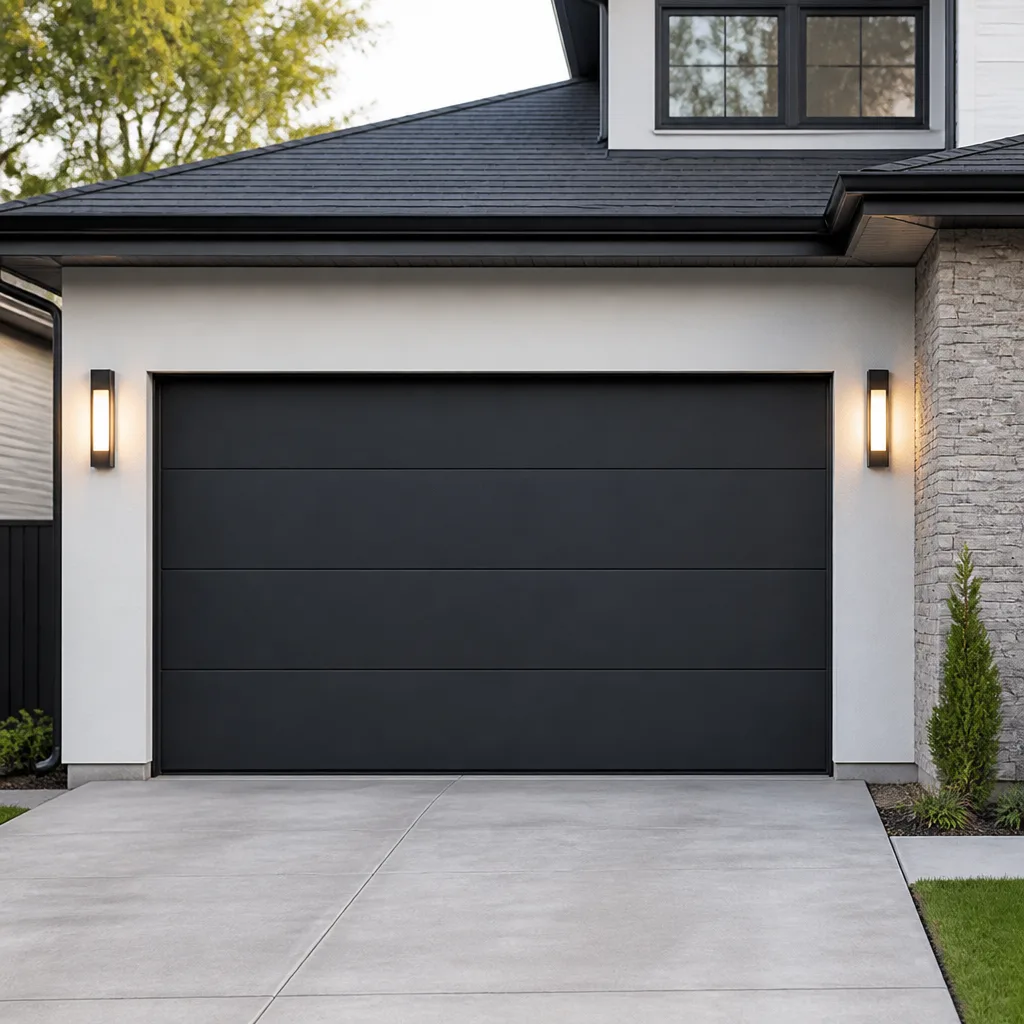
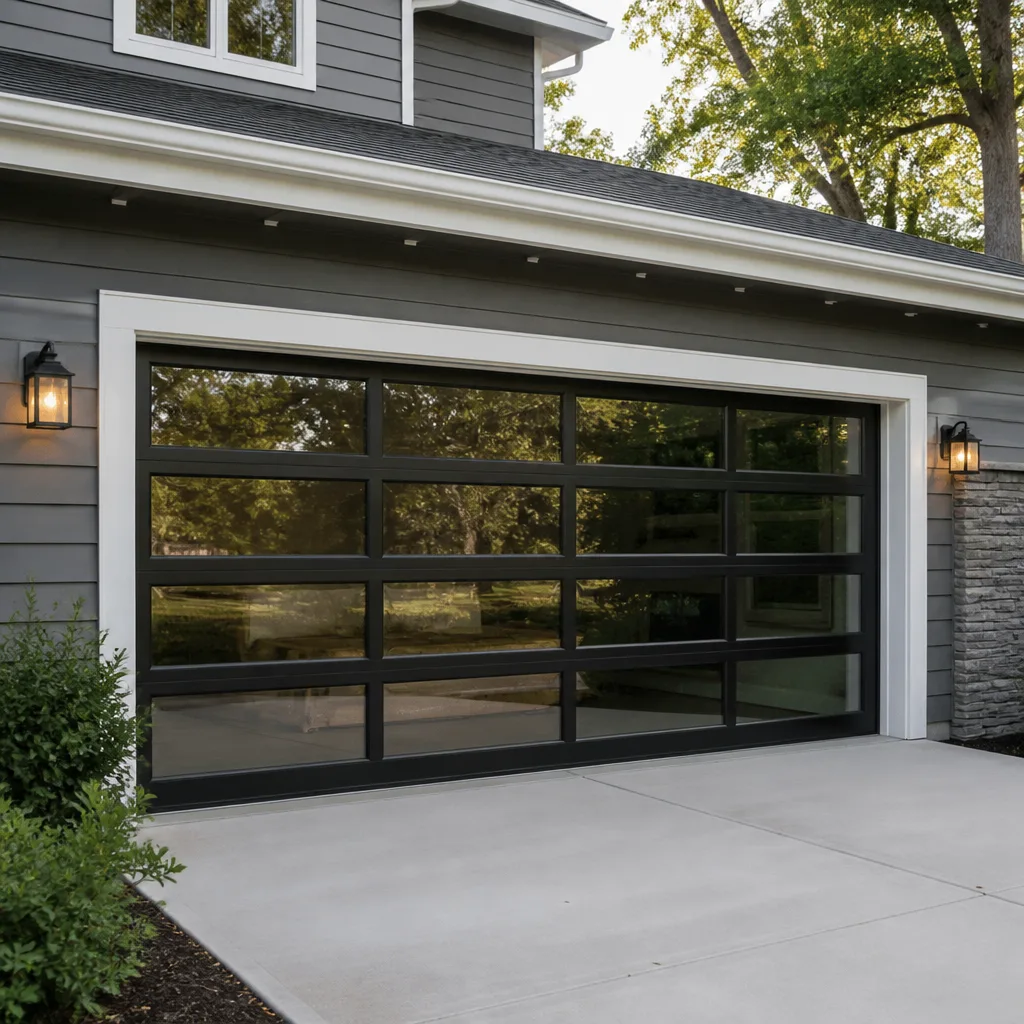
 Before
 After
After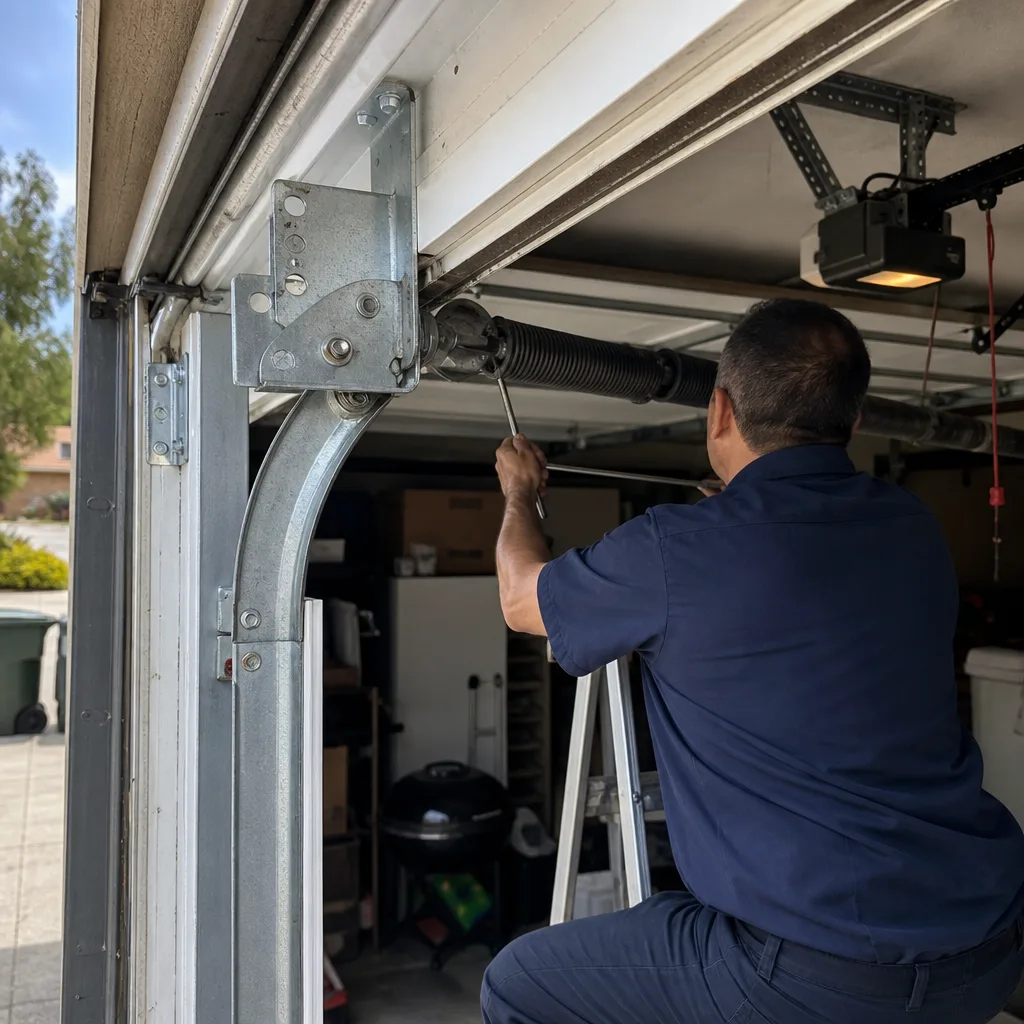 Before
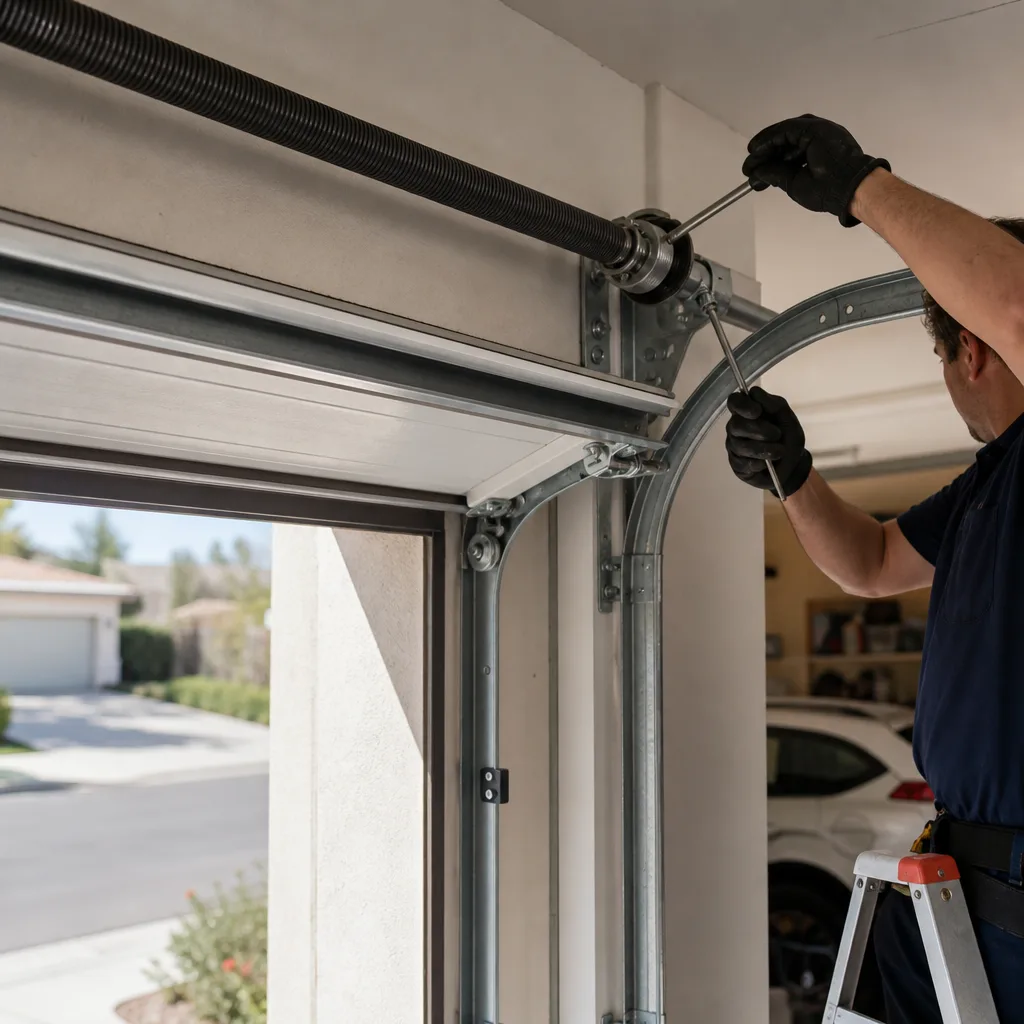 After
After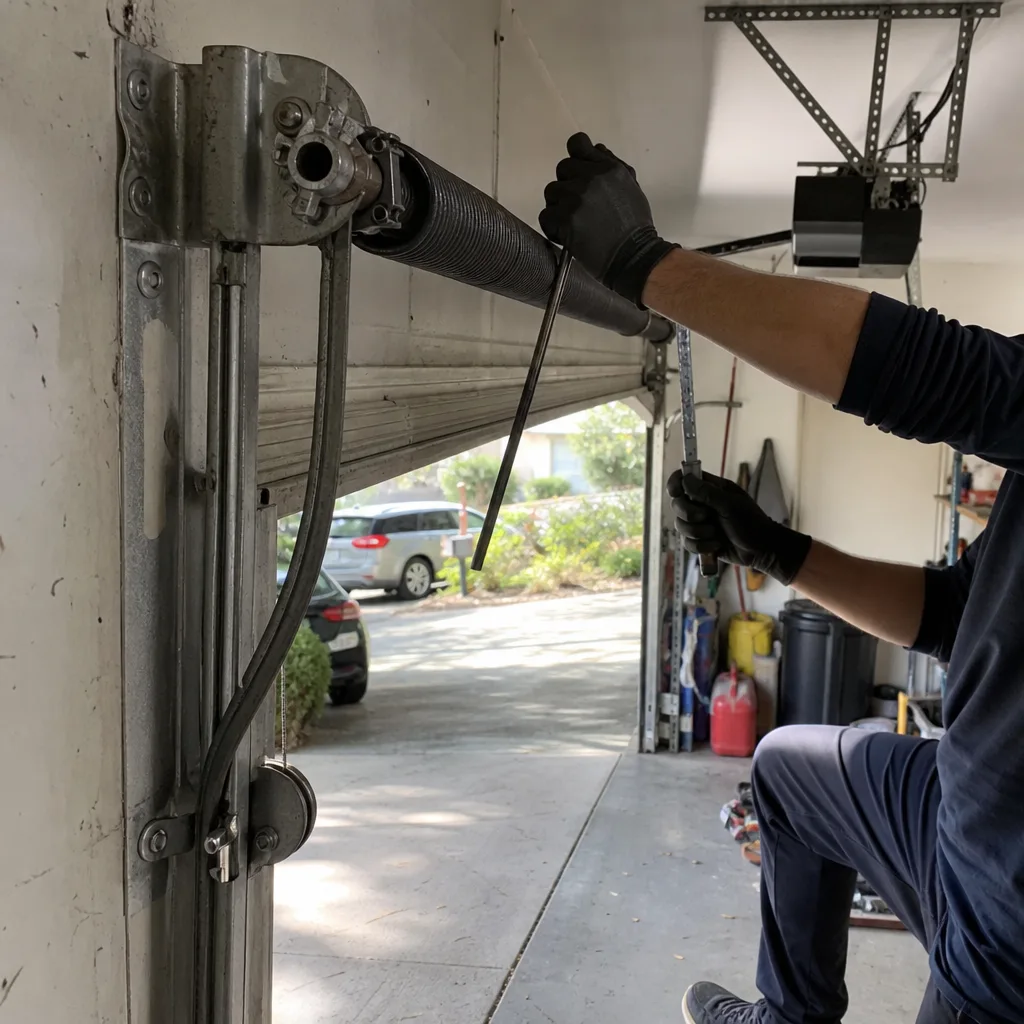 Before
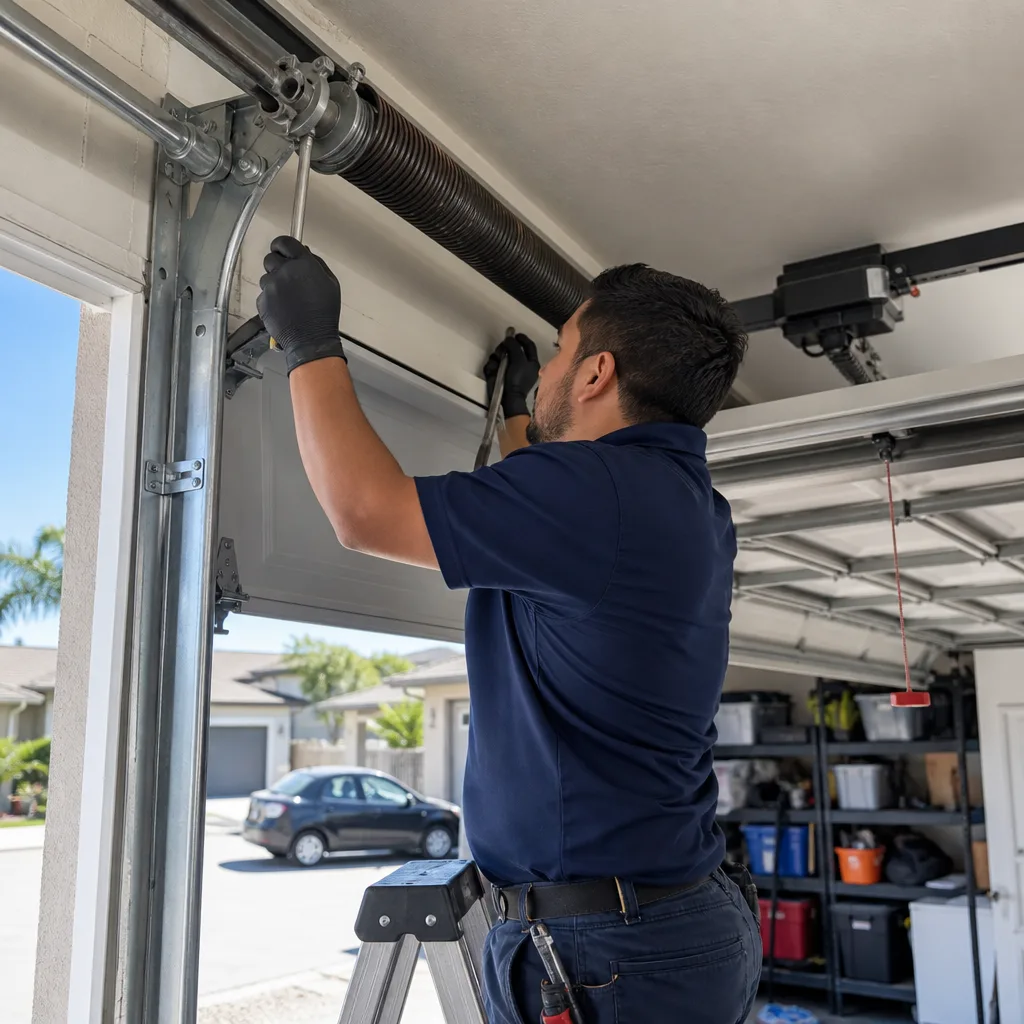 After
AfterSeasonal Garage Door Care for Escondido: Year-Round Homeowner’s Guide
The Santa Ana winds that barrel down the 78 corridor in October don’t just raise fire risk. Sustained 50 mph gusts push laterally against your garage door with enough force to bend bottom brackets, shear roller stems, and rattle loose every bolt you forgot to check. Most Escondido homeowners don’t think about their garage door until it refuses to open, but by then the damage has usually been building for months. This guide walks you through what actually happens to your door through Escondido’s four real seasons: Santa Ana season, marine layer season, the summer heat spike, and the January cold snap. For a deeper dive, see The Complete Guide to Garage Door in Escondido.
Quick Answer
Seasonal garage door maintenance in Escondido means four targeted checkups per year: pre-Santa Ana hardware tightening and bracket inspection in September, rust prevention on exposed metal during marine layer months, bottom seal adjustment when summer heat expands your concrete slab, and spring tension checks during winter cold snaps. Most seasonal failures trace back to one skipped inspection: cable drums, which unravel without warning and drop the door off its track. A one-hour seasonal check costs far less than the emergency repair that follows neglect.
Table of Contents
- Santa Ana Season: The Wind Load Problem Most Guides Ignore
- Marine Layer Months: Hidden Rust on a Dry-Climate Door
- Summer Heat: Concrete Slab Expansion and Bottom Seal Gaps
- Winter Cold Snaps: Why Springs Lose Tension at 40 Degrees
- The One Annual Task: Cable Drum Inspection
- Spring Cycle Count: Know What’s Left on Yours
- What You Can Safely Do Yourself (and What You Shouldn’t)
- Common Mistakes to Avoid
- When to Call a Professional
- Frequently Asked Questions
Santa Ana Season: The Wind Load Problem Most Guides Ignore
Every October, the same two questions come up in Escondido hardware stores: “Why is my garage door groaning?” and “Did that gust just bend something?” The answer is usually yes. Santa Ana winds are a genuine structural event for garage doors, not a cosmetic one. A standard 16-foot double door catches roughly 112 square feet of wind surface. At 40 to 50 mph, that’s over 700 pounds of lateral load slamming against hardware that was designed for vertical load. The failure points are predictable, and they’re all visible before the first red-flag warning if you know where to look.
September Pre-Santa Ana Checklist
- Bottom brackets: These L-shaped steel plates anchor the lower rollers to the door. Wind pushing the door inward torques them. Look for hairline cracks where the bracket bends, and check that both bolts are tight against the door section. A loose bottom bracket under wind load will tear the bolt holes wider until the door drops off the track.
- Roller stems: Nylon rollers wear, but steel roller stems bend. Wind gusts push the door sideways, and the stems take all of it. Roll the door up manually and check that each roller sits straight in its hinge. A stem bent as little as 1/8 inch will make the door sound like a train on every open and close.
- Hinge bolts: The hinges between door sections loosen every season, but Santa Ana winds speed it up. A socket wrench and fifteen minutes tightens every hinge bolt on a standard door. Do this before the first wind event, not after.
- Track alignment: Standing inside the garage, sight down the vertical track on each side. The gap between the track and the door should be the same top to bottom. Wind-induced door flex can spread the track 1/4 inch, which then causes the rollers to bind.
- Weatherstripping: The rubber jamb seals on each side should press snugly against the door. Wind tears them loose, and once they’re flapping, debris works into the track. Replace any torn section before October.
We’ve repaired more wind-damaged doors in Escondido than we can count, and the pattern is always the same: a $12 bracket that tore through the door because it was never checked. In our experience with Garage Door Repair in Escondido, fifteen minutes of September inspection prevents most October failures.
Marine Layer Months: Hidden Rust on a Dry-Climate Door
Escondido averages about 15 inches of rain a year, so homeowners assume rust isn’t a problem. Then June arrives and the marine layer pushes inland after midnight, coating unpainted hardware with condensation four or five nights a week. That’s the difference between dry-climate metal and coastal-metal reality. The same fog that waters your succulents is quietly rusting the galvanized track brackets, the torsion spring, and the cable anchor points on your garage door.
Rust on a garage door doesn’t announce itself with the orange flaking you see on old cars. It starts as a dull gray patina on zinc-coated hardware, then moves to pitting where the cable rides against the drum. Once a torsion spring develops surface rust, the fatigue life drops measurably. Rust creates micro-abrasions on the spring wire, and those micro-abrasions become stress risers under cyclic loading. Translation: a rusty spring snaps sooner than a clean one, all else equal.
What to Check During June and July
- Torsion spring: The spring above the door should be uniformly gray or black, not mottled brown. Light surface rust can be wiped with a rag and a thin coat of white lithium grease designed for garage door springs. Heavy scaling means the spring is near the end of its cycle life regardless of what the door mechanics feel like.
- Cable anchor pins: Where the lifting cable attaches to the bottom bracket, look for rust weeping from the pin hole. This is a high-stress point, and rust there means the cable is corroding internally, where you can’t see it.
- Track bolts and flanges: Any bolt that’s turned orange is a bolt that’s weakened. Track bolts are cheap to replace and expensive to ignore.
- Garage door panels: If you have a steel door, check the bottom edge of the bottom panel. Marine layer condensation pools there, and once the factory paint is scratched, rust creeps upward under the finish. Touch-up paint or a clear coat seals it before the panel blisters.
Clopay, Amarr, and Wayne Dalton all treat their steel doors for corrosion resistance at the factory, but factory coatings are engineered for average conditions, not for the marine layer pattern that sits on Escondido’s inland valleys from June through August. A few minutes with a rag and some light grease each summer extends hardware life by years. The team at Otto’s Garage Door home has seen hardware from 2004-installed doors that still looks serviceable because the homeowner wiped it down each June, sitting next to five-year-old hardware that’s rusted through because nobody ever looked.
Summer Heat: Concrete Slab Expansion and Bottom Seal Gaps
Every summer we get calls from Escondido homeowners convinced their garage door opener motor is dying, and in most cases the opener is fine. The problem is the slab. Concrete expands in sustained heat, and a typical 20-foot garage slab can grow 1/8 to 1/4 inch between July and September. That expansion pushes the slab edges toward the door opening, which means the door’s bottom edge drags against the high spot in the slab, which means the opener strains harder and trips its force limit, which is why the door reverses on its way down and wakes you at 6 a.m.
The issue isn’t just slab expansion. The rubber bottom seal or astragal ages faster in Escondido’s summer than in milder climates. UV exposure, plus reflected heat off the driveway, hardens the rubber until it cracks. Once it cracks, the seal loses its compression, and the gap under the door widens. That’s how scorpions, mice, and the hot Santa Ana air get into your garage in August.
Your July Heat Checklist
- Watch the door close at half speed: Stand inside and watch the bottom edge meet the slab. If it touches on one side first, that’s slab high-spotting. If it compresses evenly but leaves daylight visible anywhere, the seal is shot.
- Run your hand along the bottom seal: The rubber should feel pliable, not cracked like old tires. If it flakes when you scrape it with a fingernail, it’s done.
- Check the opener force setting: Most modern LiftMaster and Genie openers have a force adjustment knob or digital setting. If it’s set too high to compensate for slab drag, one day the door closes on something it shouldn’t, and the opener won’t reverse in time. This is a safety issue, not just a nuisance.
- Lubricate the hinges and rollers: Heat thins lubricant and drips it out of the hinge pivots. A dry hinge under a hot sun means metal-on-metal wear. A spray lube with a straw nozzle gets into the hinge pins without making a mess.
If the door is dragging and you can’t fix it with the opener settings, a Garage Door Installation in Escondido pro can re-level the bottom panel or install a thicker bottom seal that absorbs the slab’s seasonal movement. This is one of those jobs where the fix costs less than the frustration of living through another summer of a door that only works when it feels like it.
Winter Cold Snaps: Why Springs Lose Tension at 40 Degrees
Escondido’s winter nights drop into the low 40s and occasional high 30s, which doesn’t sound dramatic until you understand what cold does to torsion spring wire. Torsion springs work by twisting the steel wire along its length. That twist stores energy. When the temperature drops, the steel contracts, which means the spring’s loaded diameter changes by a fraction of a percent. That fraction shifts the spring’s torque output slightly, but more importantly, cold steel is more brittle. The spring doesn’t absorb shock as well. A door that opens smoothly at 70 degrees can feel ponderous at 40 degrees, especially in the first few inches of travel.
What homeowners notice in January: the door opens slower than it did in October, the opener motor sounds strained, and the door doesn’t stay up if you release it manually. That third symptom is the important one. A torsion spring that holds the door open when it’s warm but lets it drift down when it’s cold is telling you something specific: the spring has lost cycle life, and cold temperatures are exposing it. Springs don’t slowly get stronger in spring and weaker in winter the way a car battery does. The cold doesn’t cause the weakness; it reveals it. If your door drifts on a cold morning, plan on spring replacement before the drift becomes a full drop.
What to Check on Cold Mornings
- Manual open test: Disconnect the opener and lift the door by hand. It should move smoothly and stay wherever you leave it. If it’s noticeably heavier at 7 a.m. than at 3 p.m., note that. That inconsistency is a cycle-life warning.
- Listen for spring creak: A light ticking or creaking from the spring as the door moves is normal for temperature shifts. A sharp snap on a cold morning is not normal; that’s a spring that just failed. If you hear it, stop using the door until someone who knows what they’re doing looks at it.
- Opener force setting review: Cold weather makes the opener work harder. If you raised the force setting to compensate, the opener now closes with too much force on warm days. Have the settings checked before the weather turns.
When we replace a torsion spring in Escondido, we count the cycles the old one was rated for and tell you what it was rated for versus what you got. A standard spring is good for about 10,000 cycles. If you’re averaging four open/close cycles a day, that’s roughly seven years. The cold snap doesn’t shorten that span; it just lets you know when you’re near the end. The conversation around Garage Door Opener in Escondido repairs starts with springs, not motors, because the opener is almost never the actual problem.
The One Annual Task: Cable Drum Inspection
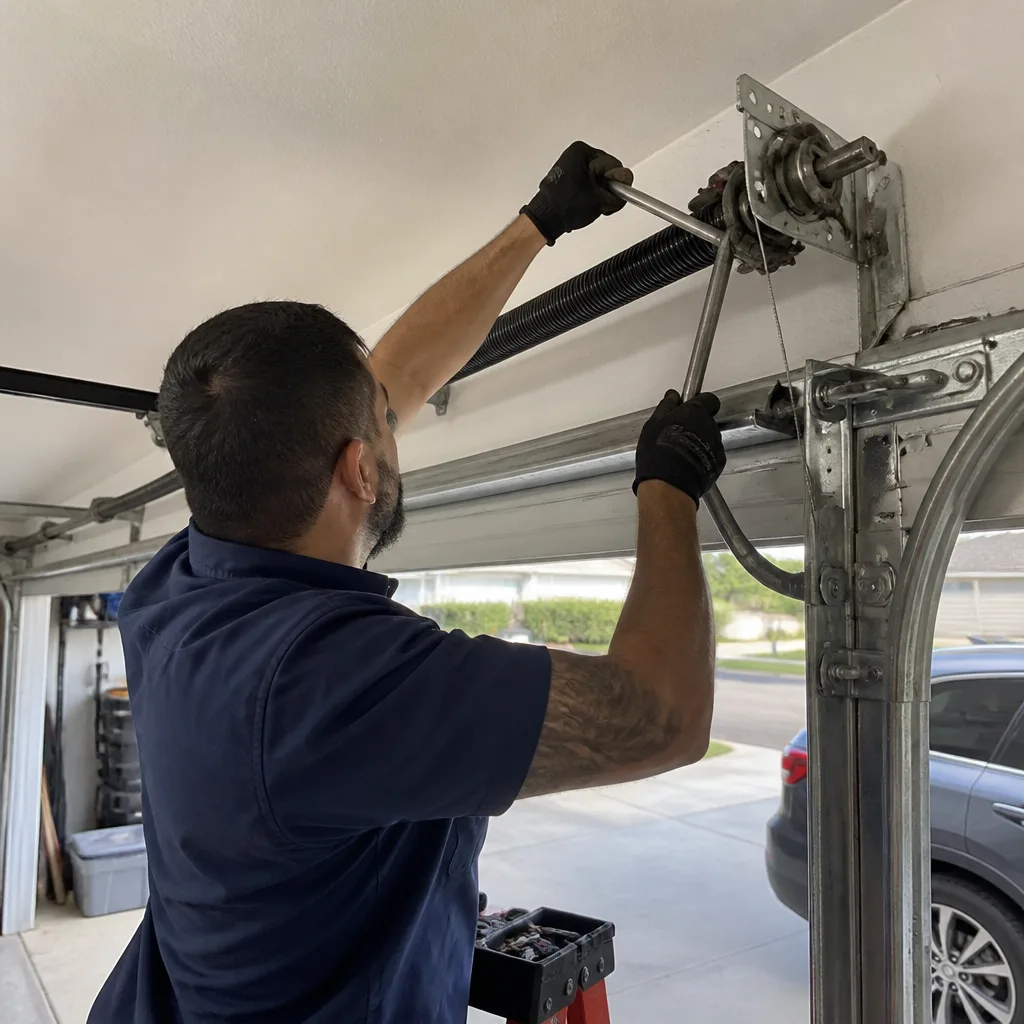
If you skip every other item in this guide and do one thing this year, check the cable drums. This is the component that fails without warning and does the most damage when it goes. The drum is the grooved spool at each end of the torsion shaft, above the door, where the lifting cable wraps and unwraps. When a cable drum fails or a cable jumps its groove, the door drops unevenly. One side hangs, the other side falls, and the door bends itself off the track. In the worst case, a snapped cable under tension whips back with enough force to injure whoever is standing near it.
How to Inspect Cable Drums (Without Touching Tensioned Parts)
- Look at the cable wrap: With the door closed, check that the cable wraps neatly in the drum groove with no overlap, no gaps, and no fraying. Any loose wrap means the cable is about to jump.
- Check the set screws: The drum is locked to the shaft by two set screws. If they back out, the drum slips, and the cable unwinds unevenly. Look for rust around the screw heads, which indicates they’ve loosened and started wearing.
- Look for cable wear at the bottom bracket: Where the cable attaches to the bottom fixture, you’ll see a loop or a crimped barrel. Frayed strands near that loop mean the cable is near failure.
- Test for even lift: Open the door to half height and stop. Both cables should have the same tension. If one side has slack, something is out of balance, and that imbalance will eventually destroy the drum.
Everything about this inspection is visual. Do not put your hands near the cable while the door is under tension. This is a look, not a touch. If you see fraying, an overlapped wrap, or a loose set screw, call someone who handles doors every day. This is one of those places where a trained eye finds the problem before it finds you. Otto counts spring cycles the way you count tire miles, and he’ll tell you what’s left on yours.
Spring Cycle Count: Know What’s Left on Yours
A garage door spring is a consumable part, like brake pads or a timing belt. It has a finite number of open/close cycles in it, and when they’re gone, the spring snaps. Not because it was installed wrong, not because it was a cheap spring, but because the wire reached its fatigue limit. Homeowners who don’t know this tend to blame the last person who worked on the door when a spring breaks “suddenly” after eleven years. The quote I always use: “A door is 200 pounds riding on two springs. Respect it.”
Spring cycle ratings matter more in Escondido than in many climates because our weather puts extra stress on the same cycle count. The marine layer adds surface rust, summer heat accelerates lubricant breakdown, and cold snaps add brittle fracture risk. A spring rated for 10,000 cycles in a mild coastal climate might deliver 8,000 useful cycles in Escondido’s swing pattern. That’s not marketing fear; it’s metallurgy.
Estimating Your Spring’s Remaining Life
- Count cycles per day: Most homeowners average 3 to 5 full open/close cycles daily. One car leaving each morning, one returning each evening, plus the weekend projects and the kids’ bikes. Be honest about your number.
- Multiply by days of service: If your springs were installed in 2004 and you average 4 cycles a day, that’s 4 × 365 × 21 years = about 30,000 cycles. If the installed springs were rated for 10,000 cycles, you’re on borrowed time, even if the door still works.
- Look for the paint mark: Many spring manufacturers mark the wire with a painted stripe that identifies the spring spec. A pro can decode that mark and tell you the design cycle life.
- Listen and feel: A door that opens fine but closes with a slight shudder, a subtle sag on one side, or a spring that makes a low grinding sound is telling you the cycle count is nearly spent.
- Lubricating hinges, rollers, and the torsion spring with spray lubricant designed for garage doors
- Tightening hinge bolts, track bolts, and opener rail bolts with a socket set
- Replacing the bottom rubber seal or astragal when it’s cracked or flattened
- Cleaning the photoelectric sensors with a dry cloth and checking alignment using the opener’s indicator light
- Testing the automatic reverse with a roll of paper towels placed under the door
- Visual inspections of cables, drums, springs, and brackets, as described in this guide
- Replacing, adjusting, or rewinding torsion springs
- Replacing or re-seating lifting cables that have jumped their drum
- Straightening bent tracks or re-hanging a door that’s off its track
- Adjusting cable drum set screws while the spring is under tension
- Replacing a bottom bracket that’s riveted to the door panel
- Any repair where you’re not 100% certain what’s holding the door up
- Waiting for the door to fail before inspecting it: This is the default approach for most homeowners, and it’s the most expensive one. Seasonal checkups catch a loose bottom bracket in September before the first Santa Ana turns it into a bent track in October. In Escondido, neglect compounds fast because the weather cycles stress different parts of the door on a predictable schedule.
- Over-greasing the torsion spring: A light coat of white lithium grease sprayed onto the spring coils is proper maintenance. Packing grease into the coils traps moisture and grit, accelerating rust and binding the coils. If grease is dripping off the spring, you used ten times too much.
- Raising the opener force instead of fixing the real problem: When the door drags, the force setting goes up, and then one day the door closes on a child’s bicycle or a pet, and the reversal doesn’t trigger. The fix for a dragging door isn’t more force; it’s finding and eliminating the drag. This is the number one safety mistake we see on service calls in Escondido.
- Ignoring a noisy door because it still works: Garage doors don’t get noisy for no reason. That grinding, squealing, or rattling is the sound of a part telling you it’s failing. A $20 roller replacement quiets the door and prevents the $400 track repair that follows a seized roller.
- Lubricating the wrong parts: Nylon rollers never get oiled, and neither do the tracks. Lubricant on the track attracts dust and causes binding. The only parts that get lube are the hinge pivots, the roller bearings, and the torsion spring.
- Forgetting the photoelectric sensors in winter: Low sun angles in December and January hit Escondido garage door sensors directly, and the glare temporarily blinds them. If your door reverses for no reason on a winter afternoon, check whether direct sun is hitting the sensor. A simple cardboard shade fixes it. Don’t disable the sensors.
- Replacing one spring instead of both: If one torsion spring snaps, the other isn’t far behind. They’ve both cycled the same number of times. Replacing only the broken spring saves money today and costs more overall, because the old spring will fail soon and you’ll pay for the labor twice. Any reputable shop replaces both springs at once.
When we install new springs in Escondido, we recommend upgrading to high-cycle springs rated for 25,000 to 50,000 cycles. They cost more up front but break far less often, and for most homeowners they outlast the door itself. If you can’t remember when your springs were last replaced, assume they’re overdue and have them inspected before the next Santa Ana season. The people who’ve been in this county since 2004 know: the door always fails on the day you’re already late for something.
What You Can Safely Do Yourself (and What You Shouldn’t)
There’s a line between homeowner maintenance and a repair that requires a trained professional, and that line is drawn at anything holding tension. If you’re unsure which side your project falls on, read our DIY vs Professional Garage Door: The Escondido Homeowner’s Decision Guide. Torsion springs and lifting cables are under enough load to seriously injure or kill. No YouTube video can substitute for the hand feel of a pro who’s installed hundreds of them. Here’s what belongs on each side of the line.
Safe for Most Homeowners
Leave to a Pro
When Otto pulls up to an Escondido home, the first thing he does is look at the door the way a mechanic looks at a car: not at the thing the homeowner called about, but at everything around it. That’s how a $40 bracket replacement becomes a door that works for another decade instead of another year. The name on the van is the name on the invoice and the name on the license.
Common Mistakes to Avoid
When to Call a Professional
There are jobs where a second pair of trained eyes pays for itself the first time. Call a pro when you see frayed cable strands, when the door is off balance enough that one side hangs lower than the other, when you hear a loud snap from the spring area, or when the door refuses to stay up in cold weather when it used to hold fine in warm weather. If a panel is dented from a wind gust or a vehicle bump, the structural brace behind that panel is likely compromised. If you’ve been quoted a repair by another company and the number feels high, ask for a second look. Otto’s Garage Door offers a free second opinion on any written estimate, no trip charge inside the county. Call (760) 313-7785 for a free estimate in Escondido.
Frequently Asked Questions
Twice a year is the minimum for Escondido’s climate pattern: once in September before Santa Ana season, and once in March after the winter cold snaps have passed. The September visit addresses wind-load hardware, and the March visit catches rust from the marine layer months and any cold-weather spring wear. Annual service is better than none, but the twice-yearly rhythm matches how our weather actually stresses your door. Call (760) 313-7785 to schedule a seasonal checkup, and we’ll walk the door with you, not just glance at it from the driveway.
Cold temperatures make torsion spring steel contract and become more brittle, which exposes weakness that warm weather hides. A spring near the end of its cycle life will hold the door open at 70 degrees but drift down overnight when temperatures drop into the 40s. The cold isn’t causing the problem; it’s revealing it. If your door is slower or heavier on January mornings, have the springs checked before the drift becomes a full failure.
Most seasonal tune-ups in Escondido run between $85 and $150 for a full inspection, lubrication, bolt tightening, and minor adjustments. For detailed pricing on larger projects, see our Garage Door Cost Breakdown: The Escondido Homeowner’s Reference for 2026. If the technician finds a worn component like a roller or a hinge, those parts add $15 to $40 each. Spring replacement runs higher, typically $250 to $450 installed for a pair of standard torsion springs. We quote the price before we start, and the number we give you on the phone is the number on the invoice. No surprises, and estimates are free.
Yes. Otto’s Garage Door answers the phone with a live person 24/7, including nine at night when a spring lets go and your car is sealed inside. We quote the job on that call and hold the price when we arrive. Same-day emergency service is available throughout Escondido, and for repair calls, we stock common springs, cables, rollers, and brackets on the truck so most fixes happen in one visit. Call (760) 313-7785 and a real person answers.
We carry torsion springs in the most common Escondido sizes, extension springs, lifting cables, rollers, hinges, bottom brackets, and bottom seals on every service truck. That means most repairs are completed the same day without a second appointment. If your door takes a nonstandard spring or an odd-size panel, we measure on the spot and order the right part. Call (760) 313-7785 and tell the person who answers what you’re seeing; we’ll tell you what we’re bringing.
We service and install LiftMaster, Chamberlain, Genie, Clopay, Amarr, Wayne Dalton, Craftsman, and Raynor products, plus most other brands found in Escondido homes. A garage door is a mechanical system no matter whose name is on the panel, but brand familiarity means we carry the right parts and know the common failure points for each manufacturer. Ask for the senior and veteran discount when you call; it’s always 10% off, always.
The Bottom Line
Escondido doesn’t punish your garage door all at once. It does it in cycles: wind stress in October, rust in June, slab expansion in August, spring brittleness in January. The homeowner who knows the pattern spends a little time and money each season; the homeowner who doesn’t spends a lot of money on one bad Tuesday. Do the visual checks, know your spring’s cycle count, keep the hardware lubricated and the bolts tight, and call someone you can verify when the problem is beyond hands-off maintenance. For more guides & resources, visit our blog. A door is 200 pounds riding on two springs. Respect it, and it’ll respect you back.
Written by Otto Reinhardt, Owner at Otto’s Garage Door, serving Escondido since 2004.